

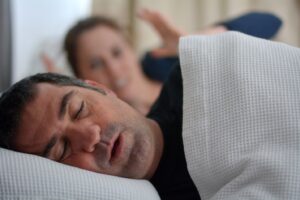
It’s understandable that many people aren’t up to speed on the facts when it comes to sleep apnea. After all, many adults believe its most common symptoms – daytime fatigue, loud snoring, and irritability – are just the realities of adult life, not a sleep disorder! So, once and for all, let’s get to the bottom of things and separate the myths of sleep apnea from the truths.
Myth #1: Sleep Apnea is Just Snoring
Fiction. This is perhaps the most misunderstood thing about sleep apnea. While snoring is one possible symptom of obstructive sleep apnea, not everyone who snores has sleep apnea, and not everyone with sleep apnea necessarily snores loudly.
If snoring is complemented by pauses in breathing during sleep, gasping or choking at night, morning headaches, excessive daytime sleepiness, difficulty concentrating, and waking with a dry mouth, that is more likely sleep apnea.
Myth #2: Only Older Adults Develop Sleep Apnea
Fiction. Although the risk of sleep apnea can increase with age, it can affect people of many ages, including children.
Factors such as anatomy, family history, certain health conditions, and lifestyle factors can influence someone’s risk. Children may also experience symptoms that look different from those seen in adults, including behavioral or school-related difficulties.
Sleep concerns should be discussed with an appropriate healthcare professional regardless of age.
Myth #3: You Have to Be Overweight to Have Sleep Apnea
Fiction. Not true at all! Being overweight or obese can increase the risk of obstructive sleep apnea, but it isn’t a requirement.
People with different body types can develop the condition. Structural characteristics of the jaw, throat, tongue, and airway are non-weight factors that can also influence whether someone’s airway becomes restricted during sleep.
This is one reason sleep apnea should not be dismissed based solely on someone’s appearance.
Myth #4: Sleep Apnea is Just an Inconvenience
Fiction. Not to sound melodramatic, but not only is this untrue, it’s a potentially harmful misconception. Untreated sleep apnea can affect more than just your sleep quality. Repeated interruptions in breathing can contribute to fragmented sleep and reduced oxygen levels.
Over time, untreated sleep apnea is associated with several serious health concerns, including high blood pressure and cardiovascular problems. Excessive daytime fatigue can also affect concentration, mood, and safety.
Getting evaluated and treated can be an important part of protecting both your sleep and overall health.
Myth #5: There is Nothing You Can Do About Sleep Apnea
Fiction. Sleep apnea is treatable, although the appropriate treatment depends on the type and severity of the condition.
Treatment may include lifestyle changes, positive airway pressure therapy such as CPAP, oral appliance therapy, surgery, or other approaches. A qualified healthcare professional can help determine which options may be appropriate.
Dentists with training in sleep medicine may also play a role in treating certain patients with obstructive sleep apnea, particularly through oral appliance therapy.
If you’re experiencing persistent daytime fatigue, nighttime breathing interruptions, gasping during sleep, or other concerning symptoms, talk with a healthcare professional. A proper evaluation can determine whether sleep apnea is present and help you find an appropriate treatment plan.
About the Author
Dr. Jennifer Sherwood Bragg graduated from the Medical College of Georgia School of Dentistry. Today, she is a Diplomate of the American Board of Dental Sleep Medicine and an active member in the American Academy of Dental Sleep Medicine and the American Sleep and Breathing Academy. Hundreds of patients with sleep apnea have benefited from visiting Dr. Bragg over the years, and she’s one of the few Medicare credentialed dentists in the Cumming, GA area who can file insurance claims for sleep apnea patients. Contact Dr. Bragg online or call (470) 281-9905.