

Diagnosing Sleep Apnea Cumming
Confirm the Cause of Your Sleep Problems

Obstructive sleep apnea (OSA) can cause some very noticeable symptoms. However, that does not mean that it is self-diagnosable. Rather, this condition should be diagnosed by a qualified medical practitioner. From there, you can start to explore your treatment options. But what exactly is involved in diagnosing sleep apnea in Cumming? This page outlines some key factors that your care provider should look for.
Medical History

Your medical history can play a big role in helping your care provider determine if sleep apnea is the cause of your sleep problems. You may have to fill out a long form that asks questions about things like:
- Sleep apnea symptoms, including snoring, insomnia, and daytime fatigue.
- Family history of sleep apnea or other sleep disorders.
- Whether or not you use (or have used) tobacco.
- Your typical alcohol consumption.
- Your weight (obesity is a major risk factor for sleep apnea).
- Systemic health conditions that are often correlated with sleep apnea, such as high blood pressure and type 2 diabetes.
Physical Exam

There are several aspects of human anatomy that might contribute to sleep apnea. For example, if your neck is larger than 17 inches (for men) or 16 inches (for women), you may be at a higher risk. Enlarged tonsils or adenoids, or a thick tongue, may also play a role in nighttime breathing disruptions. The size and positioning of your upper and lower jaws can be very important as well.
A thorough physical exam can help your care team to identify such anatomical issues, which can help them arrive at an accurate diagnosis.
Ruling Out Other Factors

Some risk factors for sleep apnea are relatively uncommon, but they should still be considered during the diagnostic process. For example, some women develop sleep problems when they experience fluctuations in their hormones. The use of opioids and certain other medications should also be talked about; a blood test may be needed to determine if these are in your system.
You should also be sure to tell your sleep physician if you have recently visited anyplace with an elevation of 6,000 feet or higher. Many people experience sleep apnea symptoms for a few weeks after being exposed to the lower oxygen levels that are present at high elevations.
Sleep Testing
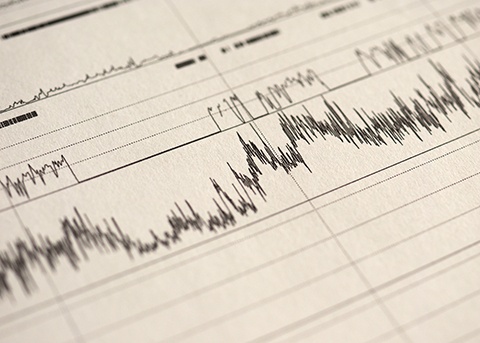
If the initial screening process makes it seem likely that you have sleep apnea, your doctor will arrange for you to undergo a sleep test, which is a non-invasive diagnostic service. Sophisticated machines will monitor you for a night, and then a sleep expert will review the results. You will then find out for sure if you have sleep apnea and how severe your condition is.
Learn More About Sleep Testing
Diagnosing Sleep Apnea FAQs
What Questions Does a Doctor Ask to Diagnose Sleep Apnea?
In order to determine whether you’re truly suffering from sleep apnea, a doctor will need to learn more about the symptoms you’re experiencing. As such, they may ask you the following questions:
- Do you feel unusually sleepy or fatigued during your waking hours?
- Has your bed partner reported that you snore loudly?
- Do you often find it hard to stay awake while you’re behind the wheel?
Additionally, your doctor may inquire about your health history. In particular, they may ask if you’ve ever smoked or if anyone else in your family has been diagnosed with sleep apnea in the past.
How Does the Apnea-Hypopnea Index (AHI) Impact Sleep Apnea Diagnoses?
Simply put, the apnea-hypopnea index (AHI) is the average number of times your breathing is interrupted every hour. Said average is calculated by dividing the number of breathing interruptions by the total number of hours you were asleep.
The AHI is essential for diagnosing sleep apnea in Cumming because it helps determine the severity of the disorder. Experiencing 5 to 14 breathing interruptions each hour indicates that your sleep apnea is mild. On the other end of the scale, severe sleep apnea is characterized by 30 or more breathing interruptions per hour.
What are the Major Risk Factors for Sleep Apnea?
There are several risk factors that can potentially increase your chances of developing sleep apnea. Significant examples include:
- The Size of Your Neck: If you have a particularly large neck circumference, there may be a greater amount of fatty tissue around the throat area, which could put you at a higher risk for nighttime airway obstructions.
- Your Age: Sleep apnea tends to be more common in older adults.
- The Alignment of Your Jaw: An improperly aligned jaw could affect the position of your tongue, thereby making it more prone to blocking your airway while you’re asleep.
- Your Family History of Sleep Apnea: If one of your parents or siblings has been diagnosed with sleep apnea, there’s a significant chance that you might develop it yourself.
Are Different Types of Sleep Apnea Diagnosed Differently?
There are three main types of sleep apnea:
- Obstructive sleep apnea, which is caused by a partially or fully blocked airway.
- Central sleep apnea, which occurs when the brain doesn’t send the proper signal to control breathing while you’re asleep.
- Complex sleep apnea, which is a combination of obstructive sleep apnea and central sleep apnea.
Regardless of which kind of sleep apnea you have, it will always be diagnosed the same way: with a sleep test. The results of sleep testing will be used to confirm whether you’re truly suffering from sleep apnea and, if so, which type it is.